There are many ways for you to travel in Mexico and I’ve tried most of them. My favorite is by foot. Whenever I have a chance I like to walk and explore the cities, the forests, the deserts, the mountains and the beaches. Mexico is a delight for all your senses and if you get away from modern transportation, you have a much better chance of enjoying the beauty and heritage of Mexico.
And since I am a cowboy at heart, I love to ride a horse. Although I have not...
There are many ways for you to travel in Mexico and I’ve tried most of them. My favorite is by foot. Whenever I have a chance I like to walk and explore the cities, the forests, the deserts, the mountains and the beaches. Mexico is a delight for all your senses and if you get away from modern transportation, you have a much better chance of enjoying the beauty and heritage of Mexico.
And since I am a cowboy at heart, I love to ride a horse. Although I have not ridden one yet, I want to ride a burro someday – what a relaxed and unhurried way to view the countryside.
Advancing to more modern transportation, you may ride in tricycle type taxis which may be powered by a small motor or by foot-power from the driver. They are usually only in cities or tourist areas. In Asia, the are called tuk-tuks or rickshaws but the only words used here seem to be tricycle or taxi.
Regular taxis abound in Mexico. The streets are filled with them. There are different types and you should ask for local advice before using them. In some areas, it is considered unsafe unless you take an authorized taxi. You also need to know whether you will pay a metered price or if you need to negotiate a price in advance.
One type of taxi is called a colectivo. It is basically a van or car that follows a specific route. Drivers watch and stop anywhere along the route to pick up or drop off passengers. They are much cheaper than a regular taxi, but drivers squeeze in as many people as possible. One evening, I counted 16 of us in the taxi and I think the driver would have stopped for more if anyone else would have been along the route.
Regular cars are a great way to travel around the countryside but it seems most expatriates are uncomfortable in the big cities. The driving here can be crazy – I’ve noticed that t is rare for drivers to stop or even slow very much for stop signs. Traffic circles are really confusing to most drivers from the US. In fact, Tijuana has many drivers from the US and finally gave up on most of the major traffic circles and installed traffic lights. Toppes are another challenge - they are speed bumps and they mean business. Some are marked with warning signs but many are not. You are also likely to see livestock on many of the roads and you really need to watch out for pedestrians. Always remember --- you have to be much more careful driving in Mexico.
The most common transportation for most people in Mexico is by bus. In cities, the buses will usually stop anywhere if a passenger is waiting. They seldom have marked bus stops. There are lots of buses and you seldom have to wait and the prices are really cheap. Bus traffic between the cities is also reasonably priced and they have three classes of service. The first class buses are excellent and a comfortable way to travel. They may even offer complimentary snacks and drinks along with a movie. They only stop at major points. Second class buses may not be air-conditioned and stop at a lot more places. The third class buses will usually stop for anyone along the road. They can get crowded and it would be rare to find air-conditioning.
A number of cities now have BRT (bus rapid transit systems). These have actual stations and the intent is to reduce congestion.
Mexico City and Monterrey have Metro systems (subways). I’ve always enjoyed the stations in Mexico City with lots of small shops and often local musicians or other artists will be found. Some of the simple musical performances will draw a nice crowd.
There is almost no train service in Mexico. There is a tourist train (El Chepe) that takes you through the Copper Canyon. Another train (Tequila Express) goes to the tequila region from Guadalajara. And a third train travels from Tijuana to Tecate.
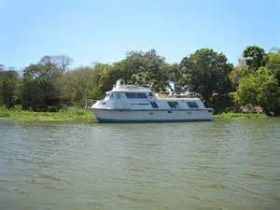
You may have a chance to travel by boat or ferry. Small boats can be found on rivers and lakes. There are ferry routes to some of the islands and from Baja California to the mainland. Mexico also has a number of ports that you can visit from cruise lines.
Of course, the fastest way to travel is by air. The ticket prices are very reasonable. I once flew from Las Vegas to San Diego and then took a local airline from Tijuana to Mexico City and my total cost including one night in a hotel was less than the ticket price of a major US Airline direct from Las Vegas to Mexico City.
Mexico has over 1,800 airports (3rd in the world). About 100 of them are international or major type airports and that gives excellent coverage for most of the country. The airport in Mexico City is the largest in Latin America. It and six others are responsible for 90% of the air traffic in Mexico. The other six are in Guadalajara, Cancún, Monterrey, Tijuana, Acapulco and Puerto Vallarta.
There are many ways to get around Mexico and the best is up to you.
In Belize, it is required by law to have third-party car insurance. If you have an accident and you’re your fault, third party insurance will pay for the damage to the other guy’s property that you caused, and nothing for you. That’s why its cheap.
If you buy a brand new car, you can get full comprehensive coverage (liability, collision; everything) at around Belize $200 (US $100) a month, but it covers everything. It may sound...
In Belize, it is required by law to have third-party car insurance. If you have an accident and you’re your fault, third party insurance will pay for the damage to the other guy’s property that you caused, and nothing for you. That’s why its cheap.
If you buy a brand new car, you can get full comprehensive coverage (liability, collision; everything) at around Belize $200 (US $100) a month, but it covers everything. It may sound expensive but it gets cheaper every year you have the car, because the value of the car goes down every year. For example, if you have a 5 year old car, automobile insurance will cost you around Belize $200 (US $100) a year. It gets really inexpensive.
What are the direct flights to and from Nicaragua?
Kent Payne
The Agosto Sandino International airport in Managua, Nicaragua has several daily and a few weekly flights directly from the United States into Nicaragua. Taca Airlines (in some places now doing business as Avianca) comes in from San Francisco, though not always on a daily schedule.
United Airlines has a major presence here in Nicaragua, with a corporate office and a customer service division. Because I fly to and from Oklahoma, we use UA into...
The Agosto Sandino International airport in Managua, Nicaragua has several daily and a few weekly flights directly from the United States into Nicaragua. Taca Airlines (in some places now doing business as Avianca) comes in from San Francisco, though not always on a daily schedule.
United Airlines has a major presence here in Nicaragua, with a corporate office and a customer service division. Because I fly to and from Oklahoma, we use UA into Houston, and then catch flights to other parts of the USA.
Delta Airlines has daily schedules, and comes in direct a couple of times a day directly from Atlanta. We've had some good connection in ATL, and getting into the north part of the states or Canada is fairly uneventful.
American Airlines offers service from Miami, and since this is the closest USA airport to Nicaragua it becomes highly trafficked.
Another provider is Spirit Airlines, who comes in with a redeye flight just after midnight from Ft. Lauderdale/Miami area and then turns right back around and heads out n the wee hours of the morning. Then you arrive in FL about 5:30 AM.... in many ways priced right, but I may be getting too old to travel all night.
Food costs in the Algarve are cheap compared to most other countries in Europe. Here there is an abundance of locally grown fruit and vegetables, fresh fish and good quality meat. Many of the products are produced or farmed locally and sold in the towns’ markets, which are friendly and delightful to shop in. This means that the fresh food is not only cheaper, it lasts longer and is more environmentally friendly. It is noticeable that all my guests who come from outside Portugal...
Food costs in the Algarve are cheap compared to most other countries in Europe. Here there is an abundance of locally grown fruit and vegetables, fresh fish and good quality meat. Many of the products are produced or farmed locally and sold in the towns’ markets, which are friendly and delightful to shop in. This means that the fresh food is not only cheaper, it lasts longer and is more environmentally friendly. It is noticeable that all my guests who come from outside Portugal comment on the amazing taste and flavor of the food, something that as a foodie I enjoy immensely but have come to take for granted.
A loaf of Portuguese white bread costs around €0.80c (about 90 US cents or .6 British pounds), a liter of milk (a quart) cost €0.90c (about one US dollar or .7 British pounds), sliced cheese is around €3.00 per pound (about US $3.40 or 2.3 British pounds), smoked ham is €4.00 per pound (about US $4.50 or 3 British pounds) and free range chicken is around €1.50 a pound (about US $1.70 or 1.2 British pounds). Beer and wine are also produced locally so it is possible to buy a good quality bottle of wine (red or white) in the supermarket for under €5.00 (about US $6.80 or under 4 British pounds).
In general, what do I need to know about FBAR (Foreign Bank Account Report)?
John Ohe - Hola Expat Tax Services
If you have an interest or signature authority over foreign financial accounts that have a total balance exceeding $10,000 at any point of the year, you are required to file the FBAR (Foreign Bank Account Report – Form TD F 90-22.1). The FBAR is separate from your income tax filing, and the due date for filing (starting in 2017) is April 15. To complete the FBAR, it is advisable to maintain records of your monthly account balances. Otherwise, the...
If you have an interest or signature authority over foreign financial accounts that have a total balance exceeding $10,000 at any point of the year, you are required to file the FBAR (Foreign Bank Account Report – Form TD F 90-22.1). The FBAR is separate from your income tax filing, and the due date for filing (starting in 2017) is April 15. To complete the FBAR, it is advisable to maintain records of your monthly account balances. Otherwise, the paperwork may become a difficult exercise. Account balances need to be converted to U.S. dollars, using the F/X rate as of the last day of the year. Failure to report (non-willful) carries a penalty up to $10,000. Willful non-compliance potentially raises the penalty up to $100,000 or 50% of the taxpayer’s foreign assets (whichever is greater).
As of July 1, 2013, the FBAR has gone electronic, and is now called FinCEN 114. BTW, the acronym FinCen stands for Financial Crime Enforcement Network. The information required to be submitted remains the same.
Where's the best sightseeing in and around El Valle de Anton, Panama?
Bill Brunner
There are at least two tour guide services in El Valle de Anton and they’ll take people to waterfalls, out on country trails and outside the Valley (the locals in El Valle de Anton sometimes refer to the area just as “the Valley”), or to the resort not too far away from the Atlantic Coast. One of the owners of these tour services owns a herpetarium (a collection of snakes in glass cages) so he will take the tourists there for sure. He has stuffed snakes and frogs...
There are at least two tour guide services in El Valle de Anton and they’ll take people to waterfalls, out on country trails and outside the Valley (the locals in El Valle de Anton sometimes refer to the area just as “the Valley”), or to the resort not too far away from the Atlantic Coast. One of the owners of these tour services owns a herpetarium (a collection of snakes in glass cages) so he will take the tourists there for sure. He has stuffed snakes and frogs there, too.
The tours also take visitors up in the hills, around the Valley and then outside the Valley and probably shows the tourists the square trees. El Valle is famous for having square trees. The trunks of these trees are square and there is a grove of them in one corner of the Valley.
There are no more golden frogs (for which El Valle is famous) unless you go to our local zoo. There are other tourist attractions such as the zoo and the hot springs. There is a butterfly sanctuary that was just built in the last 6 months or so.
We thank Daryl Ries for giving us the idea to have Jet Metier interview select contributors of Best Places who enliven our pages with their experiences and revelations. The conversation began with Daryl talking about a real estate expo she had attended just prior to their scheduled talk, and then continued with Daryl reviewing her life on four continents. In a chronological sleight of hand, we present the second part of the interview first, where Daryl speaks of her...
A Sunday afternoon turns from day to night quickly as dark, heavy clouds cover the sky. Lightening bolts across the dark sky and distant thunder rumbles to announce the coming storm. Lights come on like twinkling stars in homes across the valley and up and down the beach. It doesn’t rain here; it is far away but welcome no matter. The fresh scent of rain comes across on the wind and cools off the balcony.
In 2006, on an early trip to Panama, I encountered Santa, Frosty the Snowman, and some other seasonal icons in front of an apartment building in Panama City. I stopped to say hello to them and to record with photographs my good fortune at having the pleasure of making their acquaintance. While engaged in the process, I noticed a Panamanian frantically waving his arms at me from the other end of the property. We walked towards each other, I very curious to see why he was so...