San Miguel de Allende is a hub for cultural activities throughout the year. There are the traditional Mexican holidays, and activities that take place during these holidays. For example, we have the Day of the Candelaria, when flowers and all kinds of plants are sold at the Parque Juarez. Dia De La Candelaria is a celebration of the beginning of the harvest in Mexico. All of the farmers and farmworkers celebrate the time of the harvest and the beginning of the planting season by making offerings to the rain gods, and asking for a bountiful harvest.
Another very celebrated holiday is Holy Week. On Good Friday during Holy Week, people go out onto the streets and walk around the different fountains in San Miguel de Allende, which are normally decorated with flowers, and wherein temporary altars have been built or created. The people who decorated the fountains normally greet people on the streets by offering them a popsicle or arroz con leche (rice with milk), or some type of drink.
There are always parties and festivities going on in San Miguel de Allende. In September, we celebrate the Mexican independence. El Jardin, the main plaza in San Miguel de Allende, holds a big celebration consisting of fireworks, mariachis and the pouring of tequila. This also includes live music in celebration of the freedom fighters who came through San Miguel de Allende and helped in liberating Mexico from Spain. During Independence Week, a lot of Mexicans and foreign tourists come into town just for this particular celebration.
On September 29th, we also celebrate the patron saint of San Miguel de Allende, during which time all of the adjacent neighborhoods in San Miguel de Allende have their particular celebrations and festivities that take place for a span of about a week or a week and a half. Each neighborhood and church often has a parade, and they come into the historical center of the town, playing live music with pre-Hispanic, Aztec, and Concheros dancers. These parades and celebrations are held in order to honor the patron saint San Miguel, or Saint Michael.
There’s one particular celebration called La Alborada, wherein fireworks are set off from El Jardin (the central area) before sunrise, and people go out to drink and to celebrate the patron saint of San Miguel de Allende. It’s a time when there are a lot of fireworks that are set off, including ‘castillos,’ a type of fireworks display where they light firecrackers attached to someone’s back, and that person then runs around town.
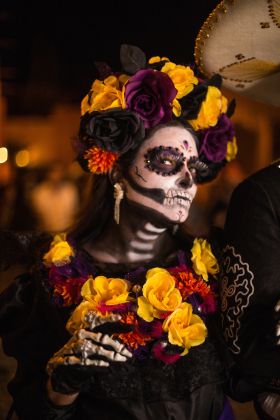
The Day of the Dead is celebrated between October 30th and November 2nd, during which time we celebrate the living and the dead. It is the day to honor the dead in Mexico, and Mexicans create altars in their homes and businesses in which they place photographs of their loved ones who have passed, along with marigolds, and food and drinks that their loved ones particularly liked. The idea is to invite their loved ones who have passed into the homes, to remember them with love, and to celebrate them as part of the living.
During the celebration, the living dress up as ‘Catrinas’ and ‘Catrines’, costumes that consist of dressing up in a black suit and tie for men, and painting their faces with a black and white skull. Women normally dress up in a tight black dress, with faces also painted, and wear a rather large colorful hat, which is often adorned with flowers. There’s elaborate face painting that goes into creating the skulls on their faces.
Here in San Miguel de Allende, we have several parades where men and women dress up as ‘Catrinas’ (female) and ‘Catrines’ (male) and walk from one point in town towards El Jardin. During these parades, people from all over San Miguel de Allende, tourists and residents alike, wait for the ‘Catrinas’ and ‘Catrines’ to arrive to take pictures, in celebration of the Day of the Dead.
People put up altars in public areas- El Jardin, around the public square, several fountains, and local restaurants and hotels to remember public figures, their loved ones, and anybody that they would like to commemorate. It’s a very beautiful sight for both tourists and residents to see, and many people come to El Jardin and walk around the central historical district, visiting all of the fountains, restaurants and hotels that have taken the effort to create these elaborate and often large altars that are very picturesque.
Both Mexican and foreign residents and tourists visit the cemetery between November 1st and 2nd. Mexicans who have loved ones buried in the cemetery normally go there a few days ahead of time and clear the gravesite and adorn it with flowers, food and drinks, as well as photos of their loved ones. On November first and second, Mexicans visit the gravesite along with their entire family. They also play music and enjoy the experience of celebrating the dead on that day. For foreigners who live here and are visiting, it’s an extraordinary experience to go to the cemetery on these days to see how the Mexicans celebrate their loved ones who have passed.
In addition, there are many different festivals as well as celebrations offered in town- stories about the Day of the Dead, movies, and all kinds of different celebrations and activities people can attend in order to learn more about the Day of the Dead, as well as to celebrate it.
(Day of the Dead celebration, San Miguel de Allende, Mexico, pictured.)



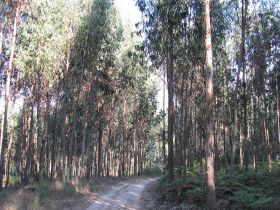 There aren’t really hurricanes in Portugal. A couple of weeks ago, we had tremendous winds but nothing like hurricanes that you have in the States.
 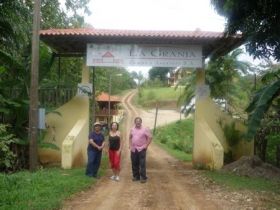 There are a lot of different people in Panama, which is truly one of the most international countries in the world that I have ever visited or lived. Having lived in New York and traveled around the world, I would say that Panama is a real melting pot of different cultures and people from all over the world. There are people who grew up here and have been here for generations who have a Chinese background or an Indian background, etc.
 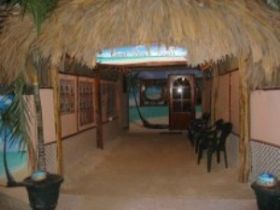 Living on Ambergris Caye is very relaxing. I worked a bit too hard for twenty odd years in suits and ties and had stress living in Canada. I used to have a 25-minute commute in my car to go to and from work in traffic. Now, I am sitting here in my office barefoot with short pants on. I jump in my golf cart and drive back and forth for about 7 minutes from where I live.
 .jpg) Wouldn’t it have been nice if, when you were growing up, you had an aunt who was always there when you needed her, who understood you, who always seemed to know what you needed and gave it to you, but who didn’t ask for anything in return? The one who, if you got into an argument with your parents, you could go to? Who would not be judgmental, and would help to make everything right? Putting aside the lopsidedness of such a relationship, we came to view Ajijic as that...
Wouldn’t it have been nice if, when you were growing up, you had an aunt who was always there when you needed her, who understood you, who always seemed to know what you needed and gave it to you, but who didn’t ask for anything in return? The one who, if you got into an argument with your parents, you could go to? Who would not be judgmental, and would help to make everything right? Putting aside the lopsidedness of such a relationship, we came to view Ajijic as that...
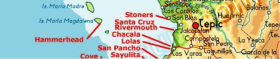 living, amenities close by, possibly Oceanside, with pleasant surroundings. And who objects to plenty of outlook for a nice capital gain on your real estate investment?