How's the kayaking, rafting, and canoeing in and around Chapala and Ajijic, Mexico?
Centeya - Radisson Blu Ajijic
I’ve never really done canoeing, but water skiing is always really fun in the lake here in Chapala and Ajijic. I would trust water skiing more than canoeing because you have control of the boat, and the lake can be very flat, sometimes even resembling a mirror, but also might get very choppy in a short span of time due to all these winds coming from different sides.
I’ve also tried wakeboarding in the lake here in Ajijic. Wakeboarding is really...
I’ve never really done canoeing, but water skiing is always really fun in the lake here in Chapala and Ajijic. I would trust water skiing more than canoeing because you have control of the boat, and the lake can be very flat, sometimes even resembling a mirror, but also might get very choppy in a short span of time due to all these winds coming from different sides.
I’ve also tried wakeboarding in the lake here in Ajijic. Wakeboarding is really fun. During wakeboarding, you need to take your boat out to the middle of the lake where the water is a lot clearer, which is really nice. A lot of people are hesitant to go into the lake, but I have no problem water skiing in it. I don’t find swimming in the lake comfortable, though. Water skiing and wakeboarding are a lot of fun, especially in the winter months when the lake is flat and looks like a mirror.
Winter is also the perfect time to see the best sunsets. Wakeboarding at sunset is like you’re on a sunset mirror. There’s a place called Boca Laguna House Chapala here, which has an area on the lake that’s especially for water skiing. In fact, it is where the Under 21 World Championship for water skiing was held in 2010, just outside of Chapala, in San Nicolas. It takes about 15 minutes from Ajijic to go to Chapala, and going to San Nicolas from Chapala would take another 10 minutes, so this area of the lake is about 25 minutes from Ajijic.
(Wave Runner on a pier, Lake Chapala, Mexico, pictured.)
The Algarve is made up of two areas. One is the coastal Algarve, which is the strip of land closest to the Atlantic Ocean, and the other area is the interior of Algarve, called “Barrocal.” This division, which is geographic more than anything else, tends to also describe the difference between the cultures of the people, especially the local people, who live in the province of the Algarve.
In the Barrocal, there are many more local traditions....
The Algarve is made up of two areas. One is the coastal Algarve, which is the strip of land closest to the Atlantic Ocean, and the other area is the interior of Algarve, called “Barrocal.” This division, which is geographic more than anything else, tends to also describe the difference between the cultures of the people, especially the local people, who live in the province of the Algarve.
In the Barrocal, there are many more local traditions. You will find people who still practice local agriculture by growing or having small holdings of garden crops. They produce the local “fire water,” which we call “medronho.” In certain areas, they may be involved in citrus farming, carob or maybe in cork production. You will find small communities, which are linked to their little towns or village. The town or village tends to be traditional in that they live in a predominantly Christian Catholic country in which there will be communities built around the local church, and the people of the area attend church quite frequently. Younger generations attend catechism and so on. This way of life and culture is particular to the interior of the province of Algarve. The traditional roots are very strong, and are linked to the religion, the agriculture, and the work of the people.
On the coast of Algarve, it is very different. The culture of people on the coast is eclectic; a neutral international society. A comparison I can make to Algarve is when we lived in Florida, it was a transient international society so people used to come and go and they used to build their networks with other international people originally within the local community and then when they move on, other people would come in to take their place. In the Algarve it’s different than that in the sense that people do not tend to move in and out frequently. People come here and they tend to stay because they like it. They build their culture in Algarve, which is very much a multinational culture built around sports, wellbeing, reasonably healthy living, and gastronomy. People love to eat here. Algarve has an international society that lives a sub-urban living, which you might observe in any international destinations.
(Bottle of Portuguese "fire water," medronho, pictured.)
The standard of living here in Nicaragua varies depending on your status in life. Just like in the US, some people live well, and others not so well.
Nicaragua is the poorest country in Central America and there are lots of people here who live on very little, but they live very happily. When you get into the happiness factor, I would say that Nicaragua is easily the happiest country in Central America and the happiest country in this part of the world. Some people here do not...
The standard of living here in Nicaragua varies depending on your status in life. Just like in the US, some people live well, and others not so well.
Nicaragua is the poorest country in Central America and there are lots of people here who live on very little, but they live very happily. When you get into the happiness factor, I would say that Nicaragua is easily the happiest country in Central America and the happiest country in this part of the world. Some people here do not live having the latest gadgets or a brand new car and perhaps, are even without power in their house, yet they live with a smile on their face and they are living very well. So in that sense, the standard of living is highest in this part of the world. People here in Nicaragua are happier than the average person in the US.
People here in Nicaragua are very happy and they enjoy their life whether they are doing very well financially or not. One of the things that you find in Nicaragua is that you have more of is time, and time is very valuable. People enjoy their time here. This Nicaraguan culture rubs off on the Americans who come to live here.
One of the main reasons why I decided to live here in Nicaragua is the quality of life. I made a decision as a young man that time is more valuable to me than money and by living here in Nicaragua, I have a lot more time in my day than I would have living in Boston. This is a hard thing to explain to someone who has not been here. They say, “How can you have more time in your day when there is only 24 hours in a day everywhere in the world?” I have found that to be untrue because here in Nicaragua, you just have a lot more time in your day. You have a lot of time to do the things that you really enjoy doing and to do the things that are most valuable, which is spending time with your family and the people you love.
(Dinner in the beach community of Chinandega, Nicaragua, pictured.)
Retirement seems to agree with the many American and Canadian residents of Coronado, which is one of the most popular expat retirement areas. Living well and living within their means is an essential aspect of making retirement work for them here in Panama.
The beach community at Coronado is a center of social activity for the coastal region, is within 2 hours from Panama City, and attracts foreigners from all over the world looking for a comfortable retirement....
Retirement seems to agree with the many American and Canadian residents of Coronado, which is one of the most popular expat retirement areas. Living well and living within their means is an essential aspect of making retirement work for them here in Panama.
The beach community at Coronado is a center of social activity for the coastal region, is within 2 hours from Panama City, and attracts foreigners from all over the world looking for a comfortable retirement. Couples over 55 through 75 are the main occupants, renters or homeowners, and most are full time. Single retirees are the next segment and often, divorcees or widowed that opt for a retirement abroad. Returning Panamanians also account for a large part of the Latin Americans who chose Panama for a safe and secure retirement.
But there are enough examples of those that come, and after a few months to a year, discover that retirement is not for them, and return to work in their own country, or they find that living far apart from their families, especially their grand kids, does not work. Finally, the balance is that some retirees who come to Panama find new careers, new opportunities, and many other welcome options that enrich their lives beyond measure.
(House in San Carlos, Panama, south of Coronado, pictured.)
The worst reason to retire to Belize is if you are used to and demand immediate gratification. Living in Belize is simple and easy, but if you need to get your hair done each week or you need super high speed internet, perhaps this isn't the place for you.
Other bad reasons might be if you have serious health issues, if you cannot support yourself, if you are not adventurous or if you cannot accept all sorts of people and personalities.
...
The worst reason to retire to Belize is if you are used to and demand immediate gratification. Living in Belize is simple and easy, but if you need to get your hair done each week or you need super high speed internet, perhaps this isn't the place for you.
Other bad reasons might be if you have serious health issues, if you cannot support yourself, if you are not adventurous or if you cannot accept all sorts of people and personalities.
Retiring in Belize is certainly an adjustment. Even living in Arizona, I had to get used to the humidity here and it made me pretty cranky at first. But, I got used to it fairly quickly and satisfied my need for "dry heat" with fans and the occasional air conditioning
Belize is worth it to me to deal with the "now and then" inconveniences we encounter here. No, I cannot go to the store to buy brussel sprouts or strawberries whenever I like. But, the mangos (pictured) and bananas taste like nothing you can find in the States. I've had to re-learn how to cook with what I do find here and that's been fun for me.
Take your time and know that it does make a difference if you are happy in Belize or not!
I came to San Miguel in 2011 to do a presentation to a group of dentists who belong to the local dental association and fell in love with the people (the indigenous Mexicans), so I returned to the USA and decided to retire and come back to live in San Miguel.
My initial plans were to retire to San Tropez in the South of France, but fate has a way of planning dreams and for some reason not revealed clearly to me, I decided to move to San Miguel de...
Panamá has the privilege of having some of the best weather in the world, as well as having primary rainforest areas, and the most beautiful nature found anywhere.
The name “Panamá” means “abundance.” Abundance of fish, butterflies and birds. We have one of the most complete collection of all of these in the world. For a visitor who loves bird watching (with over 850 species), or who enjoys nature, this is the place to come.
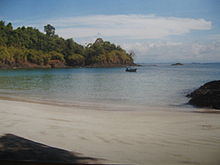
Bocas Del Toro is located in the Republic of Panama on the Caribbean side of the country. The coastal views are of lush tropical trees, shrubs, flowers and beaches. Many islands dot the ocean in this beautiful mystical blue water paradise.
You can get to Bocas del Toro by plane from Panama City or from Costa Rica's airport at San Jose. Buses have regular scheduled trips, and there are many car rental locations in the country of Panama: Thrifty Car...